
William Tong
Distinguished Professor of Chemistry and Biochemistry , Analytical Chemistry
Interim Vice Provost
office: GMCS 209C
email: william.tong@sdsu.edu

Research Interests
We have developed novel nonlinear multi-photon laser methods for chemical analysis with zeptomole-level (10-21 mole) or sub-parts-per-quadrillion-level detection sensitivity for a wide range of areas including biomedical, environmental and security applications. The Tong Lab has been funded by various funding agencies including the National Science Foundation, National Institutes of Health (R01), National Institute of General Medical Sciences, U.S. Department of Defense (CCAT), U.S. Department of Homeland Security and various corporate funding sources for studies in analytical chemistry, bioanalytical chemistry, environmental chemistry, physical chemistry and biophysics.
Laser wave mixing offers comparable or better detection sensitivity levels for biomolecules as compared to widely used fluorescence-based methods and yet our wave-mixing methods can detect both fluorescing and non fluorescing molecules with excellent sensitivity levels. Hence, biomolecules could be detected in their native form without using tags or labels (more convenient), with fluorophore tags (using existing labels and procedures) or with chromophore tags (more widely available). The laser probe is very small (picoliter) and it can be positioned precisely inside the analyte (e.g., a single bio cell) for 2D and 3D spatial mapping. The input laser beams create dynamic laser gratings at the atomic or molecular scale and the resulting nonlinear optical effect produces a strong signal beam that shoots out of the analyte. Unlike currently available techniques such as fluorescence methods, our laser methods produce a strong coherent laser-like signal beam, and hence, it is easy to detect with excellent signal-to-noise ratios. Picoliter-level probe volumes offer effective interfacing to sensors, microchannels, microarrays, lab-on-a-chip, chip-based electrophoresis systems and microfluidic devices that are suitable for studying mechanisms and dynamics of important chemical and biological processes.
Our patented laser wave-mixing methods can distinguish not only large biomolecules but also small isotopes. Our laser-based detectors are more portable and less expensive than isotope-capable high-resolution mass spectrometers. Wave-mixing laser methods yield hyperfine profiles (atomic fingerprints), and hence, unambiguous isotope information from both stable and radioisotopes. Hence, one could use stable isotopes as biotracers instead of radioactive biotracer isotopes. We have also studied fast laser-powered pyrolysis with laser-induced diagnostic real-time monitoring of reaction rates, intermediate species and mechanisms of semiconductor materials for better understanding of fundamental physical and chemical processes.
We use a wide range of lasers with wavelengths from UV (solid-state lasers) and visible (tunable external cavity diode lasers) to mid-IR (tunable quantum cascade lasers). Potential applications of our ultrasensitive nonlinear laser methods include earlier detection of diseases (Parkinson's, cancer, etc.), more sensitive detection of biomarkers, cancer cells and viruses (HPV), better design of cleaner drugs, more sensitive detection of pollutants and chemicals both inside the human body and in the environment, remote standoff detection of chem/bio agents, and even authentication of paintings and art objects.
Recent Publications
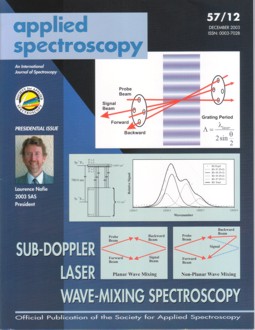
- "Ultrasensitive Detection and Separation of Pancreatic Cancer Biomarker CA 19-9 Using a Multiphoton Laser Wave-Mixing Detector Interfaced to Capillary Electrophoresis,"
Liang J., Tong W.G.,
ACS Omega (2023). (doi: 10.1021/acsomega.3c02845.) - "Sensitive detection of heart-failure biomarkers natriuretic peptides using multi-photon laser wave-mixing spectroscopy,"
Suprapto J., Tong W.G.,
Talanta 253, 123859 (2023). (doi: 10.1016/j.talanta.2022.123859.) - "The importance of porphyrins in blue light suppression of Streptococcus agalactiae,"
Bumah V.V., Morrow B.N., Cortez P.M., Bowman C.R., Rojas P., Masson-Meyers D.S., Suprapto J., Tong W.G., Enwemeka C.S.,
Journal of Photochemistry and Photobiology B: Biology 212, 111996 (2020). (doi: 10.1016/j.jphotobiol.2020.111996.) - "Optimizing the bactericidal effect of pulsed blue light on Propionibacterium acnes - A correlative fluorescence spectroscopy study,"
Violet Vakunseh Bumah, Daniela Santos, Masson-Meyers, William Tong, Chris Castel, Chukuka Samuel Enwemeka,
J. Photochem. & Photobiol. B: Biology 202, 111701 (2020). (10.1016/j.jphotobiol.2019.111701.) - "Sensitive multi-photon nonlinear laser wave-mixing detection of cancer and heart failure biomarkers,"
Jie Liang, James Suprapto, Samantha Crawford, William G. Tong,
Procedings SPIE , 111050N (2019). (10.1117/12.2529899.) - "Determination of malachite green, crystal violet, brilliant green and methylene blue by micro-cloud-point extraction and nonlinear laser wave-mixing detection interfaced to micellar capillary electrophoresis,"
Jean Sebastien Pradel, and William G. Tong,,
Analytical Methods 9, 6411-6419 (2017). (doi:10.1039/c7ay01706e.) - "Sensitive detection of malachite green and crystal violet by nonlinear laser wave mixing and capillary electrophoresis,"
Eric J. Maxwell, and William G. Tong,,
Journal of Chromatography B-Analytical Technologies in the Biomedical and Life Sciences 1020, 29-35 (2016). (doi:10.1016/j.jchromb.2016.02.040.) - "Sensitive analysis of alpha-synuclein by nonlinear laser wave mixing coupled with capillary electrophoresis,"
Manna F. Iwabuchi, Marcel M. Hetu, and William G. Tong,,
Analytical Biochemistry 500, 51-59 (2016). (doi:10.1016/j.ab.2016.01.010.)